Book Review: Mark Twain
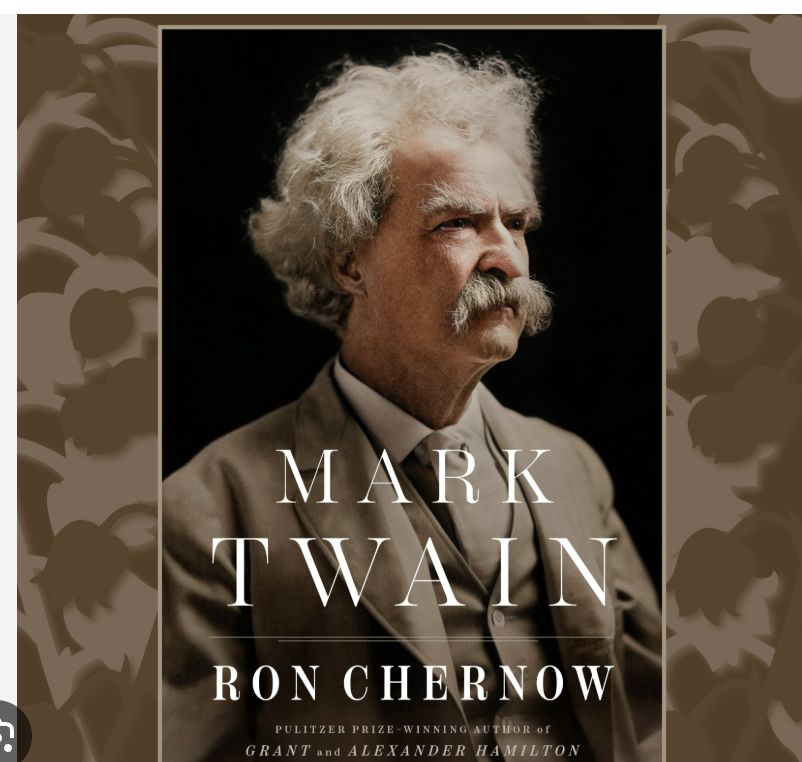
Mark Twain, by Ron Chernow
I have been madly in love with Mark Twain for a long time. Like people who were his contemporaries, I find his storytelling captivating. That’s how it started, anyway. Then I started learning more about him, and how he believed that laughter isn’t needed in Heaven because everyone is already happy. It’s just a way for us to cope with the miseries of life down here. You know that three-volume autobiography of his that was released in 2010, a century exactly after his death? I own it and I’ve read two of the three. The Ken Burns two-episode series? Oh yes, I’ve watched it.
All that to say that when I sat down with this book, I was excited to see what new things Chernow would bring to light. His book about Alexander Hamilton was good enough to spark the Hamilton phenomenon. I’ve become quite a Chernow fan as well, having read Hamilton, Grant, and his book about the Warburg family which was phenomenal. One of my favorite historical authors writing about one of my favorite historical figures. It was a no-lose proposition!
Well, my journey started out as a disappointment. I found that Chernow seemed to just be rehashing things I had heard about Twain in many other places. I tried to remember that most people reading this book would not have heard the stories repeatedly so it would be new to them. Still, it didn’t seem to have the usual Chernow touch. I was wondering if it was me or him. Then, something changed.
When Chernow got to Twain’s three daughters a whole new world of Twain scholarship opened up to me. In all of that learning, I had never heard that Susy went to Bryn Mawr. I never heard mention that she had a lesbian relationship there (it seems). I had never heard about Clara and her long-standing musical skills and training. I had never delved into the personality of Jean. She was always presented as the sick one, and that was the extent of it.
Chernow offers a rich history not just of Twain but also of Livy and his daughters. You see him through his daughters’ eyes, which is not always pleasant. In fact, many times it is ROUGH, and he had to live through that, losing two of this three daughters during his lifetime.
Chernow’s look at Twain is unflinching. From his bonehead business decisions to his desire to be worshipped, from his pedophiliac tendencies to his complete selfishness, it is all here. Instead of Twain’s works carrying the story, it is Twain the man.
A few chapters in I would not have thought I’d have recommended this book. Having finished it, I definitely do.