Book Review: The Anti-Ableist Manifesto
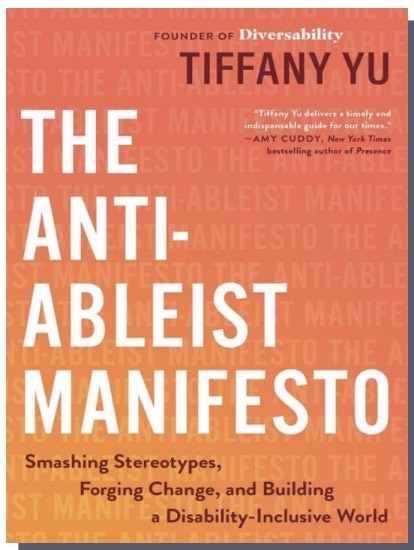
Tiffany Yu seems to be everywhere. She is active on LinkedIn, she is active on Instagram (which is where I first found her), she does book tours in person, and she does rock climbing in person. Given this mega presence, it is not surprising that I also heard about her book when it came out. I finally got a chance to read it.
In reality, I think this book could be considered a handbook for people who are not disabled but who have disabled people in their lives. I think it’s a great complement to Boldly Belong, by Julie Harris, which serves as a kind of handbook for those who are disabled. Although the word “anti” makes you think the book is going to be combative, it truly is not (at least from my vantage point). It aspires to educate, just like Ibram Kendi’s How to Be An Antiracist educated. If you disagree with the advice you might see it as an attach, but I think both books are really useful as ways to jump into someone else’s shoes.
I did not agree with everything in this book. Yu makes the point that you don’t have to. She is a big proponent for not letting silence rule the day. Face the discomfort and talk it out. That being said, the idea of pointedly asking someone if my disability (dwarfism in this case) makes them uncomfortable is not something I would do ever. It seems to me the next step after that is to say, “Oh I do make you uncomfortable? So sorry about that, let me just leave.” I figure the world spends enough time making me uncomfortable and nobody asks me about that, so there’s no quid pro quo.
There are a lot of great tips that extend beyond simply watching your ableist language and actions. How should you react if someone you care about is being bullied or even threatened? How should you control your curiosity about what happened to someone if your questions are truly about caring for them?
The book has a lot of great resources and checklists that make it easy to discuss each chapter if that’s of interest to you. You can also use these pages to create your own action item list. What do you want to work on? What have you been told you need to work on? How can you accept those action items with grace?
Tiffany does a great job of citing others in the disabled community who have obstacles that differ from hers. She cites professional organizations as well as other types of organizations that exist to help people. I think ideally this book could be read as a group that combines disabled people with those who are not disabled. Talk it out, ask questions in a safe space, and see what actions you can spark.